What Does Moisture Wicking Mean in Clothing?

You’ve probably seen the phrase “moisture wicking” on a tag and wondered what it actually does. It sounds technical, but the idea is simple.
A moisture-wicking fabric pulls sweat away from your skin, spreads it across the fabric’s outer surface, and allows it to evaporate quickly. The result is clothing that helps you stay cool and dry, even when your day heats up.
That difference matters whether you’re walking to work, traveling, or wearing performance clothing for long stretches. The right clothing can help you stay comfortable and dry without needing to think about it.
How Moisture Wicking Fabrics Work
Wicking is about movement. Instead of letting moisture collect, wicking fabric moves it away from your body.
Here’s how fabrics work step by step:
- Sweat forms touching your skin during movement or heat.
- The fabric uses capillary action to pull sweat away.
- That moisture is spread away from the skin and toward the outer surface.
- Exposure to air allows it to evaporate, keeping you dry.
This process, sometimes described as “sweat to the fabric’s outer" layer, prevents moisture from being absorbed into a fabric’s yarns the way traditional materials behave. Instead of trapping sweat, the fabric’s structure keeps moisture moving.
The result? You stay cooler, drier, and more comfortable, whether you’re sprinting through an airport, giving a big presentation, or just sitting on a sunny patio at lunch.
An effective moisture-wicking fabric doesn’t just move sweat. It also dries fast, resists cling, and stays comfortable close to the skin.
Why Moisture Wicking Fabric Matters
The benefits of moisture-wicking go beyond staying dry.
When sweat stays on your skin, it can:
- Cause skin irritation
- Make clothing feel heavy
- Affect body temperature
- Lead to discomfort during long days
What moisture-wicking clothing does is help avoid those problems by keeping moisture moving away from your body. That means you’re less likely to feel damp, overheated, or distracted by what you’re wearing.
This is especially important in hot weather, during activities like hiking or running, or when wearing structured pieces for hours at a time. Clothing that manages sweat helps you stay focused, not fidgeting.
Moisture Wicking Cotton vs. Regular Cotton
Traditional cotton fabrics may feel soft, but they absorb moisture instead of moving it. Once cotton gets wet, it tends to retain that moisture, making the garment heavier and slower to dry.
That’s why cotton and other synthetic fabrics behave differently. Cotton is a natural fiber, but it’s often less durable than synthetic fabrics when it comes to moisture control. In fact, cotton is less durable than synthetic options designed for performance.
By contrast, synthetic fabrics like polyester or nylon are designed to move moisture efficiently. They don’t hold sweat against your skin, and they dry faster after wear or washing.
This is why cotton fabrics are rarely the choice for moisture-wicking, especially in active wear, athletic clothing, or modern performance menswear.
The best types of moisture-wicking fabrics
Not all fabrics perform the same way. The best moisture-wicking fabrics share a few key traits: they’re breathable, durable, and quick to dry.
Common options include:
- Polyester - Durable, lightweight, and excellent at managing sweat
- Nylon - Strong, flexible, and smooth against the skin
- Merino wool - A natural fiber that regulates temperature and resists odor
Among natural and synthetic materials, synthetics generally provide stronger moisture-wicking capabilities, while merino wool is one of the most breathable natural options available.
These fabrics on the list are often blended to balance comfort, durability, and performance. The goal is always the same: move sweat away from the skin and keep clothing dry during intense use.
Breathability and temperature control
Breathability plays a major role in how moisture-wicking feels. Breathable fabrics allow air to circulate, which speeds evaporation and helps regulate body temperature.
When fabrics allow air to pass, moisture can evaporate more easily. That’s why breathable and lightweight construction is so important in performance clothing.
In cold-weather gear and clothing, moisture management matters just as much. Sweat trapped against the skin can cool rapidly, making you feel colder. A breathable moisture-wicking layer helps keep you warm by keeping you dry.
Where you’ll find moisture-wicking fabric in everyday clothing
Today, moisture control isn’t limited to the gym. You’ll find sweat-wicking fabric across many types of clothing, including:
- Dress shirts and polos
- Base layers worn close to the skin
- Performance trousers and travel clothing
- Cold-weather layers
Modern clothing made with moisture-wicking material supports long days without calling attention to itself. It works quietly in the background.
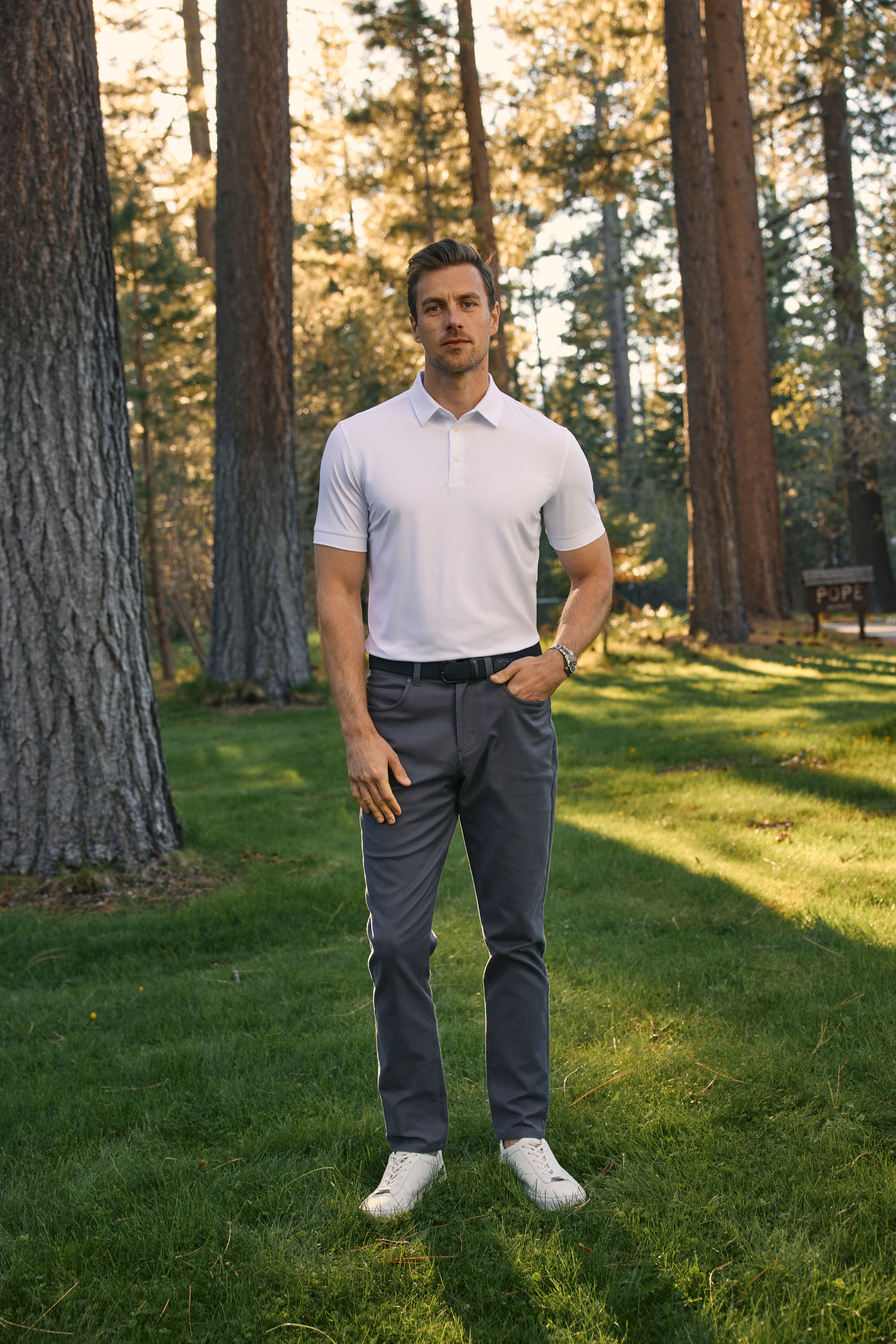
At Mizzen + Main, moisture-wicking material is built into performance clothing designed for real life. Dress shirts, polos, and pants use moisture-wicking properties to manage sweat without changing how the garment looks or feels.
That’s the difference between novelty performance and everyday usefulness.
Caring for moisture-wicking clothing
To maintain moisture-wicking capabilities, care matters.
The best way to wash these garments is in cold water with mild detergent. Avoid fabric softeners, which can coat fibers and reduce performance. Let items air dry or tumble dry on low.
Proper care helps clothing stay dry and comfortable over time and preserves the structure that makes wicking effective.
Frequently Asked Questions About Moisture Wicking Clothing
1. Is moisture wicking the same as quick dry?
Not exactly. Quick dry refers to how fast a fabric dries after it’s already wet, while moisture wicking is about moving sweat away from your skin before it becomes a problem.
2. Can you wash moisture wicking clothes normally?
Yes—just avoid fabric softeners, as they can coat the fibers and reduce performance.
3. Is moisture wicking only for activewear?
No. We use it in dress shirts, polos, and pants so you can get all day comfort without sacrificing style.
4. Do moisture wicking clothes keep you warm or cool?
Both—by moving sweat away from your body, they help you stay cooler in heat and warmer in cold by keeping you dry.
Sources
- Dong, L. (2018, January 8). Moisture-wicking athletic apparel: A matter of style or performance? The Sport Information Resource Centre. https://sirc.ca/articles/moisture-wicking-athletic-apparel-a-matter-of-style-or-performance/(opens in new window)
- De Sousa, J., Cheatham, C., & Wittbrodt, M. (2014). The effects of a moisture-wicking fabric shirt on the physiological and perceptual responses during acute exercise in the heat. Applied Ergonomics, 45(6), 1447–1453. https://doi.org/10.1016/j.apergo.2014.04.006(opens in new window)
Jonny Wills is the Creative Director for Mizzen+Main where he leads creative strategy while still doing his first (and favorite) job—writing copy. And for the record, he put that em dash there all by himself.