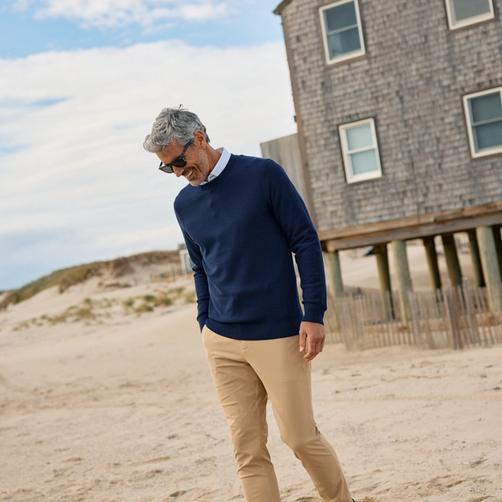
How to Choose Pants for Men by Body Type

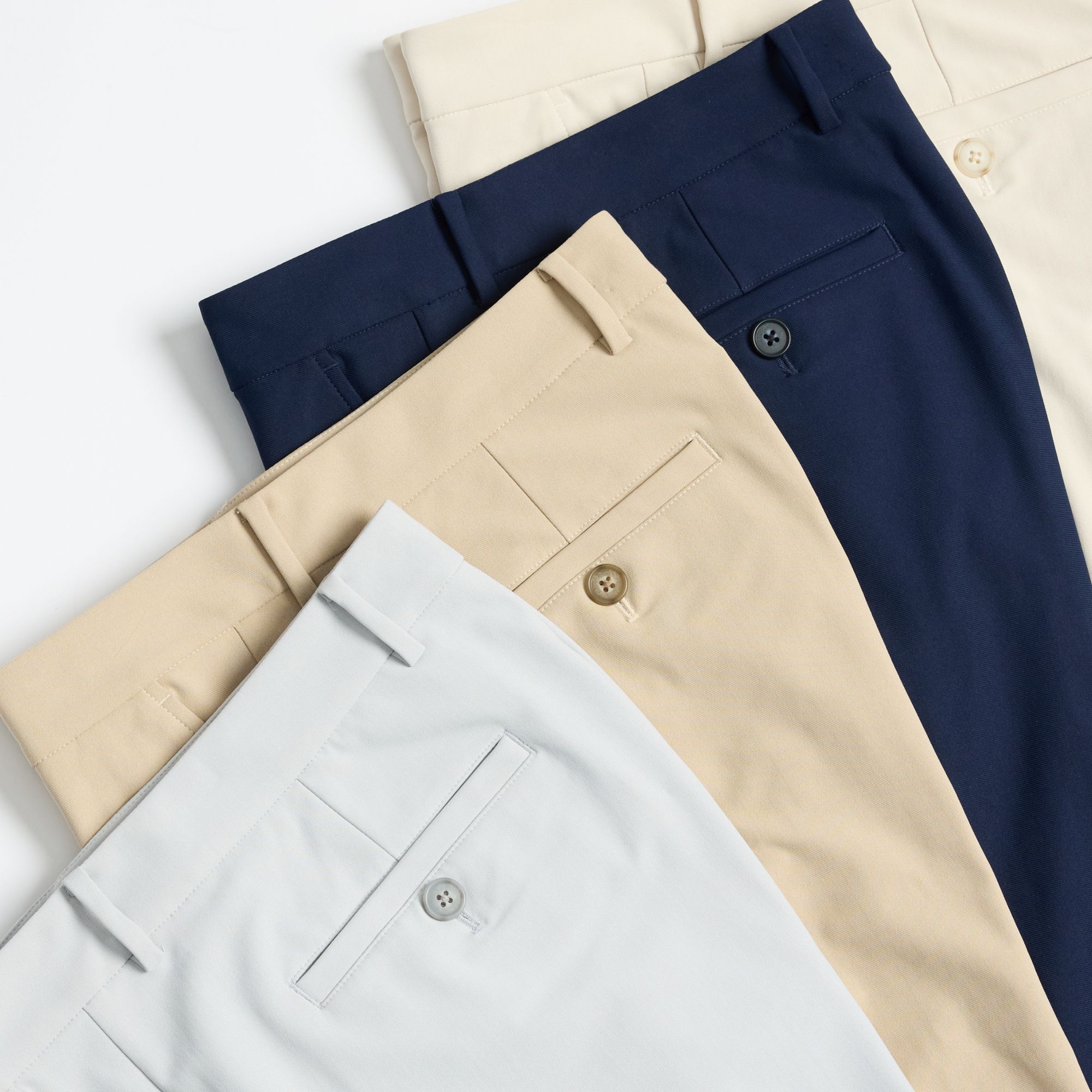
Choosing pants shouldn't feel like a guessing game, but most men walk out of the fitting room with something that fits the waist and looks wrong everywhere else. The problem isn't you. Fit depends on more than a single number on the tag.
When you find the right pants, you stop thinking about them. They look good. They feel right. And you move on with your day.
This guide will teach you how to find pants that actually work for your build: the rise that balances your proportions, the cut that suits your frame, and the fabric that moves with you instead of against you.
How to Test Pant Fit the Right Way
Choosing the right pants starts with understanding what works on you. The right pair should follow your frame without restriction, and finding the right fit goes beyond checking the waist size on the tag.
Start by standing in front of a mirror and looking at how the fabric falls. You want clean lines from waist to ankle, with no pulling, bunching, or twisting.
Now sit down. This is where most pants show their flaws. Make sure to check the following:
- The waistband should stay in place.
- The thigh shouldn’t feel squeezed.
- The fabric should move with you, not resist.
- The silhouette should stay balanced from the side.
Check where the hem lands on your shoe. It should lightly touch the top of your shoe with little to no excess fabric folding at the ankle. Getting the ensures clean lines from waist to shoes. Avoid a dragging hem as that can make even the best pants look sloppy.
Walk. Bend. Move naturally (no need for jumping jacks). The best-fitting pair of pants feels secure without restriction. Men's pants that use performance fabric with stretch make this easier. When fabric adapts, achieving the perfect fit becomes about style preference rather than accommodation.
What to consider when choosing pants
Three things determine whether pants will actually flatter your build:
- Rise and waist placement
- Leg cut
- Room through the thigh and seat
Get one wrong, and the whole silhouette shifts.
Rise and waist placement
Trouser rise refers to the measurement from the crotch seam to the top of the waistband. It changes how your body type reads visually.
- A mid or high rise - Creates the visual effect of sleek and longer legs by positioning the waistline closer to your natural torso break. As master tailors explain, a higher-waisted pair of pants gives the illusion of a longer leg(opens in new window) and a shorter body, making you look more elegant.
- Low rise - Does the opposite by compressing the midsection and shortening your lower half visually.
For most body types, mid or high-rise options deliver the best results. It provides coverage when you bend and maintains structure when you sit. It also pairs cleanly with dress shirts, whether tucked or untucked.
Pants designed to pair with untucked dress shirts typically feature a mid-rise that maintains proportion whether your shirt is tucked or not. Stretch fabrics make the rise feel less restrictive, so you can choose based on aesthetics rather than function alone.
Leg cut and overall fit
The cut of a trouser leg shapes your pants from the thigh to the ankle. This is where most men go wrong.
Here’s how the main styles break down:
- Straight fit - Consistent width from top to bottom. This classic style flatters nearly everyone and never looks dated. Menswear experts consider a straight-leg fit the most versatile middle ground(opens in new window) for most men.
- Slim fit - Stays closer to the body from top to bottom. Men with leaner frames often prefer this style because it adds definition without excess fabric.
- Tapered fit - Offers more room in the thigh, then narrows toward the ankle. It balances athletic frames well without going too slim.
- Relaxed fit - Gives you breathing room through the seat and thigh. It prioritizes comfort and ease of movement but can shift into sloppy territory if the cut is too generous.
The sweet spot for most men falls somewhere between straight and slim fit. Overly tight pants restrict movement and distort your shape, while overly loose pants add unnecessary bulk.
Room in the thigh and seat
If pants don’t fit well, this is usually why.
The thigh and seat area cause more frustration than any other part of your pants.
When the fit is right:
- The fabric drapes smoothly.
- Pockets stay flat.
- Movement feels natural.
Too tight, and you’ll see pulling across the thigh. Too loose, and the fabric bunches up, adding visual weight.
Athletic builds typically need more thigh room, while slimmer builds can wear closer cuts without issue. Performance fabrics with stretch allow for better movement without requiring you to size up.
The best-fitting men's pants don’t require constant adjustment.
Best pants for different body types
Your body type should guide your choices. The right pair for one build may look completely wrong on another.
The average American man is said to have a waist circumference of 40.6 inches(opens in new window), but averages only tell part of the story. The following recommendations match different body types with the fits that complement them best.
Shorter builds
If you’re under 5'9", elongation is the priority.
Mid-rise pants create the illusion of longer legs. Slim fit or slightly tapered fit options maintain clean lines without overwhelming your frame.
Pay close attention to hem length. Fabric bunching at the ankle immediately shortens your appearance. Aim for a clean break that sits right at the top of your shoe.
Avoid these choices that compress the visual line and add bulk where you don't want it:
- Cuffs
- Low-rise options
- Wide leg cuts
- Excess fabric pooling at the bottom
Slim builds
Leaner builds benefit from structure. The challenge is finding pants that add visual weight without drowning you in fabric.
A slim or straight pair of pants adds definition without drowning your shape. Slim-fit men's chino pants with stretch properties work particularly well here. They balance comfort and style while maintaining a clean silhouette.
If you're unsure what to wear with chinos, keep it simple: a fitted polo, a lightweight sweater, or a crisp dress shirt keeps the look intentional without overcomplicating it.
A mid-rise keeps proportions balanced and supports the best overall look.
Avoid these:
- Low-rise fits, which can make legs appear shorter,
- Overly relaxed fit styles. They swallow your frame.
Athletic Builds
Strong thighs and a muscular build require thoughtful fit choices. The wrong cut either clings uncomfortably or adds bulk you don't need.
A tapered fit or straight leg solves this problem. These cuts offer room through the thigh where you need it while keeping the ankle neat. The result is a silhouette that looks intentional.
Stretch performance fabrics are critical here. They adapt to the muscle without pulling or bunching, so you get freedom of movement without sacrificing appearance. Mid or high-rise provides coverage and balance here.
Make sure to avoid:
- Skinny fits that will cling to your quads and distort your shape.
- Overly relaxed cuts that will look sloppy and add visual weight.
Pair well-fitted pants with men's performance polo shirts or dress shirts to create a cohesive look that complements your athletic build. And if you're refining how to wear outfit loafers with tailored pants, keep the hem clean and the ankle sharp — no bunching.
Tall Builds
If you're over 6'2", you need to balance length without going too narrow or too wide. The challenge is proportion, not accommodation.
Mid-rise pants usually work best for most tall frames, providing coverage without awkwardness. Straight or slightly slim cuts maintain a balanced silhouette without going too narrow.
The hem should hit at the top of your shoe with a slight break.
Avoid:
- Dragging fabric or excessive pooling at the ankle.
- Overly slim cuts, which can look too narrow on a tall frame.
- Low rise that appears awkward because it shortens the visual torso on an already elongated body.
Broader midsection
pants need to sit comfortably and drape smoothly without pulling or creating unflattering lines.
Regular or high-rise options sit at the natural waistline, where they stay put. They provide coverage without digging into your midsection or sliding down throughout the day.
Low rise compresses the torso and disrupts proportion. Give yourself room where it matters.
Performance fabric helps maintain drape throughout the day, especially important if your schedule doesn’t slow down.
Style and fabric tips for men's pants
What your pants are made of affects both how they fit and how they function in your actual life.
Heavier fabrics like denim hold their structure well but can feel rigid. Lighter blends with stretch properties adapt to your body better and resist wrinkles.
For professional settings, dress pants in navy or charcoal create a streamlined silhouette. For versatility, office casual chinos in neutral or lighter shades like khaki and grey transition easily between meetings and dinner settings.
Look for:
- Stretch for movement
- Wrinkle resistance
- Shape retention
Straight or tapered cuts in stretch fabrics offer timeless versatility. These styles transition smoothly between different contexts without looking out of place.
How to choose pants with confidence
The perfect pair of pants works with your body, not against it. Fit and proportion matter far more than following whatever's popular this season.
Use your body type as a guide to narrow down the best cuts, and you'll eliminate the frustrating cycle of buying pants that look good on the rack but wrong on you.
Investing in quality pays dividends. Men's pants built with performance fabrics last longer, look better over time, and feel more natural throughout your day.
At Mizzen+Main, we engineer every pair of pants to deliver structure, stretch, and durability. Our chinos and dress pants are built for real life, office, travel, and weekend, without sacrificing appearance. And that's the point. You show up confident, knowing your clothes aren't holding you back.
Sources
- GQ. Why Your Suit Doesn't Fit. https://www.gq.com/video/watch/master-tailor-why-your-suit-doesnt-fit(opens in new window)
- CDC (National Center for Health Statistics). Body Measurements. https://www.cdc.gov/nchs/fastats/body-measurements.htm(opens in new window)
Jonny Wills is the Creative Director for Mizzen+Main where he leads creative strategy while still doing his first (and favorite) job—writing copy. And for the record, he put that em dash there all by himself.